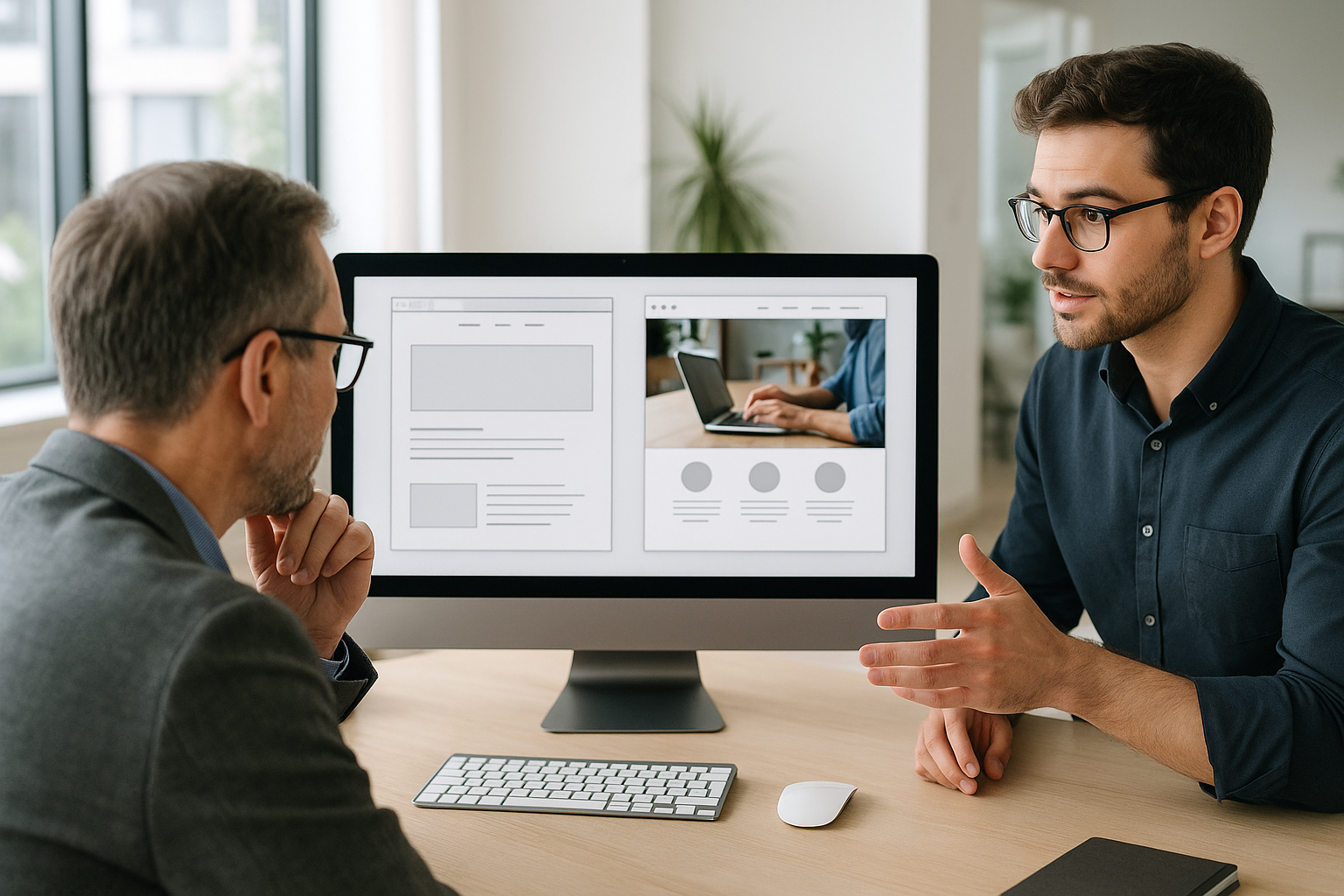
Many entrepreneurs see web design as a purely aesthetic detail — something that just needs to “look nice.” In reality, a website’s design is one of the most powerful factors influencing buying decisions and trust. It’s not an exaggeration to say that poor design can destroy good sales, while a well-thought-out design can sell even a mediocre product.
In a world where competitors are one click away, your website is no longer just a digital business card. It’s an active sales agent working 24/7. Let’s break down exactly how design influences sales and credibility, step by step.
Trust Is Built Visually — Instantly
Before a visitor reads a single line of text, their brain processes the site visually. Colours, spacing, fonts, and layout all send a subconscious message: “I can trust this business” or “something feels off.”
A clean, well-spaced, consistent design signals professionalism and reliability. On the other hand, a cluttered site with misaligned elements, harsh colours, or hard-to-read fonts raises doubts. Users may not consciously think “this site is bad,” but they feel uneasy — and they leave.
And without trust, there is no sale.
Design Shapes Price Perception
Here’s a critical point: design changes how people perceive value. Two businesses can sell the same service at the same price, but the one with better design will instantly feel more premium.
A well-designed website justifies higher prices. It communicates quality, experience, and stability. A weak design, by contrast, pushes customers toward negotiation or toward competitors who present themselves better.
Design doesn’t change the product — it changes how the product is perceived.
And perception sells.
Clarity Reduces Friction
A website that sells is easy to understand. The visitor immediately knows:
what you offer
who it’s for
what the next step is
Design plays a decisive role here. A structured layout with clear visual hierarchy naturally guides the eye. Headlines stand out. Buttons are obvious. Information is grouped logically.
When design is confusing, mental fatigue sets in — and fatigue leads to abandonment. Good design removes friction and makes buying decisions easier.
Call-to-Action Is Design, Not Just Text
Many believe a call-to-action is only about wording. In reality, design determines whether it’s noticed at all. A poorly placed button, low contrast, or a crowded section means it won’t be clicked.
High-converting websites use design to highlight key actions. Spacing around the button, colour contrast, size, and placement all matter.
Great design doesn’t force action — it invites it. It doesn’t shout; it subtly guides. And that increases conversion rates without feeling aggressive.
Design Creates Emotion — and Emotion Sells
Buying decisions are emotional first, rationalised later. Design creates that initial emotion. Colours can convey safety, excitement, or calm. Images can spark desire, aspiration, or trust.
A cold, generic website with no personality creates no connection. A carefully crafted design makes users feel like “this is the right place.”
When visitors feel comfortable on your site, they’re far more likely to buy or get in touch.
Consistency Reinforces Credibility
Professional design is consistent: the same colours, the same visual language, the same structure across all pages. Consistency signals organisation and stability.
A site where every page looks different creates uncertainty. Even subconsciously, users wonder whether the business is serious or improvised.
Credibility isn’t built through promises — it’s built through details. And design is the sum of those details.
Design Affects Time on Site
A visually pleasant website encourages exploration. Users stay longer, read more, and interact more. The longer they stay, the higher the chance of conversion.
Poor design — cluttered, tiring, or difficult to use — causes quick exits. And users who leave quickly don’t become customers.
Good design doesn’t just attract — it retains.
Poor Design Creates Suspicion
Today, people are far more alert to scams, fraud, and fake businesses. A poorly designed website immediately raises red flags. Visitors question whether the business is real, active, or capable of delivering what it promises.
A professional design, combined with trust signals (testimonials, real photos, clear contact details), reduces these fears. The website becomes visual proof that the business is legitimate and serious.
Design and Conversion Go Hand in Hand
A website that sells isn’t accidental. It’s the result of a clear strategy where design supports business goals. Every element has a purpose: to attract attention, explain value, persuade, or prompt action.
When design is treated as decoration, sales suffer. When it’s treated strategically, it becomes a growth engine.
Conclusion
Your website’s design is not a secondary detail. It’s one of the most powerful tools for sales and credibility. Online, people judge fast — and decide just as fast. You have seconds to earn trust and interest.
Poor design repels good customers.
Well-thought-out design attracts them, convinces them, and turns them into sales.
The difference isn’t subtle.
It’s measurable, direct — and highly profitable.