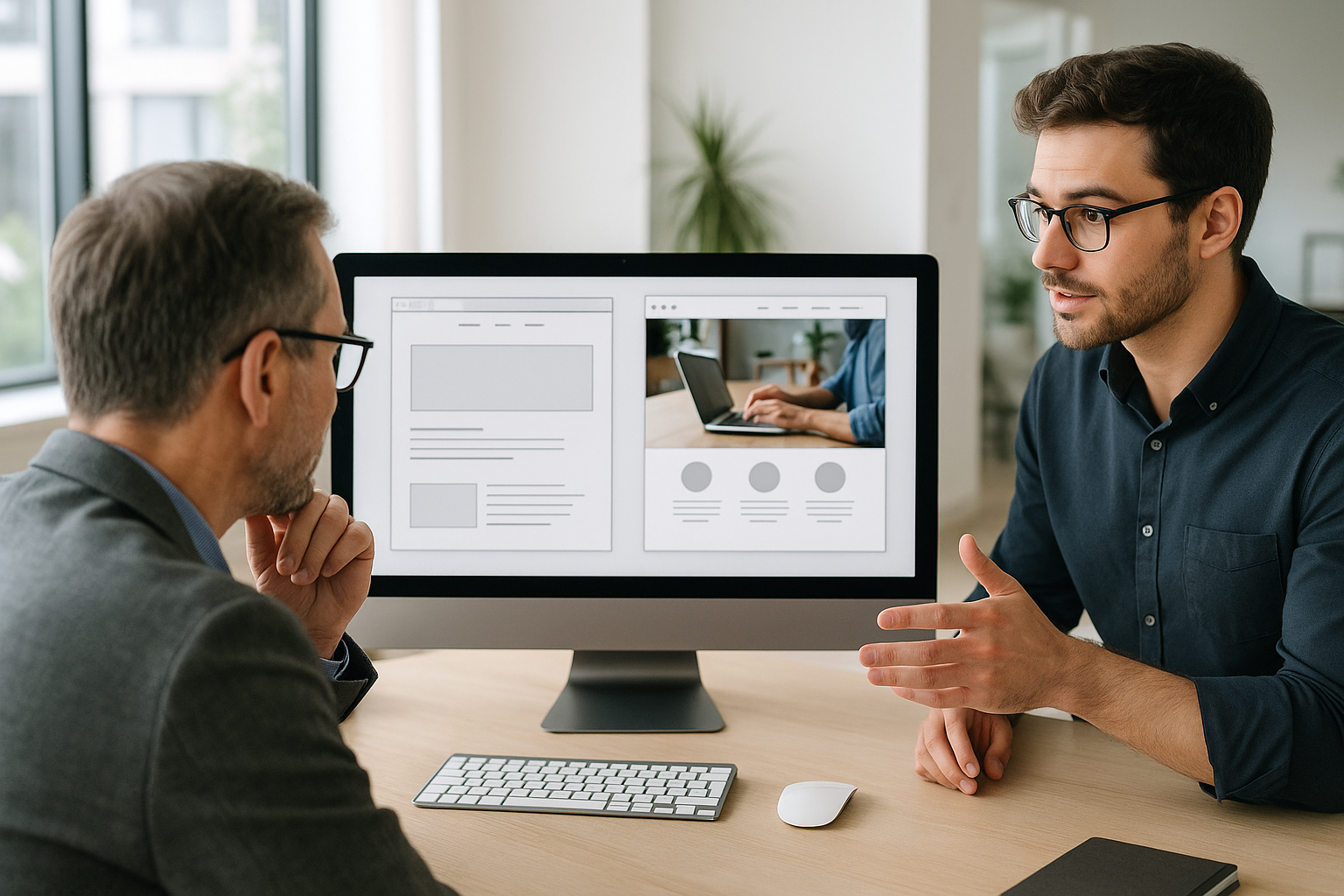
In 2026, a website is no longer just a digital business card. For many businesses, it is the first point of contact with a potential customer, a sales channel and a tool for market positioning. That is why the conversation around web design 2026 is not only about visual appeal, but about how design, content, performance and strategy work together to deliver results.
Business owners now expect more than a good-looking website. They want a platform that builds trust, loads quickly, works flawlessly on mobile and helps users make decisions with ease. At the same time, online competition is stronger and visitors have shorter attention spans. A poorly planned design can lose valuable opportunities within the first few seconds.
This article explains, in practical terms, which directions matter most in web design in 2026, which techniques are worth applying and how to build a website that supports real brand growth.
Why web design 2026 means more than aesthetics
Many clients begin with the idea that design is about colours, fonts and images. These elements still matter, but in 2026 they are only part of the equation. An effective website must combine visual identity with functionality, message clarity and ease of use.
Strong design answers a few essential questions: does the visitor immediately understand who you are and what you offer? Can they find important information quickly? Does the site feel trustworthy? Can they take a clear next step, such as requesting a quote, calling your team or completing a form? If the answer is no, the issue is not just appearance, but the overall digital experience.
In practice, this means a modern website must be built around business goals. For a service company, the focus may be lead generation. For an online shop, conversion and retention may take priority. For a local brand, visibility and credibility may be the main objectives. Design is no longer decoration. It is commercial infrastructure.
User experience becomes the top priority
One of the most important directions in web design 2026 is the growing focus on user experience. Visitors no longer have patience for complicated menus, cluttered pages or vague messaging. They expect interactions that are simple, fast and intuitive.
A good experience starts with a logical structure. The menu should be clear, pages should be easy to navigate and essential information should be placed intelligently. A user should not have to work hard to understand what services you offer, who they are for and how to get in touch.
What a good user experience looks like in practice
- Simple navigation that helps users reach the information they need quickly.
- Clear visual hierarchy through headings, white space and easy-to-spot buttons.
- Direct messaging that explains the value you offer without confusing wording.
- Trust signals such as testimonials, case studies, a portfolio or clearly visible contact details.
- A coherent journey from interest to action.
For example, if someone lands on the website of a construction company, they want to quickly see the types of projects completed, examples of work, the service area and how to request an estimate. If this information is hidden or fragmented, conversion rates will fall.
Mobile-first design is no longer optional
In recent years, mobile traffic has become dominant across many industries, and in 2026 a mobile-first approach is standard. This does not simply mean that a website displays on a phone, but that it is designed from the outset for smaller screens.
Contact buttons need to be easy to tap, text must be readable, images should be optimised and forms should be short and clear. A website that looks excellent on desktop but is difficult to use on mobile will lose customers directly.
For local businesses, this matters even more. Many users search for services on their phones while on the move. If they can find the right information quickly, they may contact you immediately. If not, they will move on to a competitor within seconds.
Speed and performance influence trust and conversions
Another major pillar of web design 2026 is technical performance. Loading speed affects not only the user experience, but also the perception of your brand. A slow website suggests carelessness, even if the services themselves are excellent.
Good performance comes from practical design and development choices: optimised images, clean structure, controlled scripts, suitable hosting and avoiding unnecessary elements. Sometimes, the desire to include too many animations or striking effects can damage the website’s main purpose.
A simple example: a services page with large images, auto-play video and complex effects may look impressive at first glance, but if it loads slowly, the user may leave before reading the offer. By contrast, a well-structured, fast and clear page has a much better chance of converting.
Strategic minimalism is gaining ground
Visual trends in 2026 are moving increasingly towards controlled simplicity. This does not mean bland pages or websites with no personality, but a style that removes noise and puts the focus on what matters. White space, carefully chosen typography and well-spaced content blocks all contribute to a more mature and effective experience.
Strategic minimalism helps businesses communicate more clearly. Instead of filling a page with dozens of icons, banners, colours and competing messages, a well-planned website chooses a few key points and supports them through design.
For a law firm, for example, an elegant, restrained and clear layout can communicate professionalism far better than a page full of decorative elements. For a B2B services company, clarity and structure inspire trust and competence.
Content and design need to work together
One of the most common mistakes is treating content and design as separate tasks. In reality, the two must be planned together. Strong copy can be lost in a weak layout, and a beautiful design can be undermined by unclear messaging.
In web design 2026, content should be structured for quick scanning. Visitors do not read every word from the start. They scan headings, subheadings, lists and highlighted elements. That is why pages should be built so that the main ideas can be understood in a very short time.
Elements that help content perform better
- Clear headings that respond directly to user intent.
- Short paragraphs that are easy to read on mobile and desktop.
- Visible calls to action without becoming aggressive.
- Social proof integrated naturally into the page.
- Concrete explanations of the process, benefits and possible results.
For example, a marketing agency should not simply say that it offers complete services. It should explain clearly what the collaboration includes, who it is suitable for and what type of goals it can support. The role of design is to make those answers easy to find and easy to understand.
Personalising the experience without complicating the interface
As technology evolves, personalisation is becoming more common in the digital experience. However, in 2026, the effective approach is not to overload a website with unnecessary features, but to use data and user context intelligently.
Personalisation may mean relevant recommendations, content tailored to different audience types, different messaging for new versus returning visitors or simplified forms based on expressed interest. The important thing is that these adjustments make the experience clearer, not more complicated.
For a company serving multiple industries, for example, it is useful to create distinct entry points for each segment. That way, a potential client in retail can quickly see examples and benefits relevant to their sector, without having to filter general information themselves.
Accessibility is becoming a sign of digital maturity
A modern website should be usable by as many people as possible. Accessibility is not just a technical concern, but a sign of responsibility and professionalism. Good contrast between text and background, appropriate font sizes, logical content structure and easy-to-use forms improve the experience for everyone.
In addition, many accessibility principles overlap with usability and SEO best practice. In other words, a more accessible website is often also clearer, more effective and better organised.
SEO and web design should be planned together from the start
A website that looks excellent but is difficult for search engines to understand has limited potential. That is why, in web design 2026, SEO should not be treated as a separate step added after launch, but as part of the planning process.
Page structure, heading hierarchy, content organisation, speed, mobile usability and message clarity all influence organic visibility. It is equally important that each page has a clear role in the digital strategy: to attract relevant traffic, respond to search intent and encourage action.
For a local business, this may mean dedicated service pages, case studies, useful content for the target audience and well-placed contact elements. For a national brand, it may mean a broader content architecture designed for different categories and stages of the buying journey.
What a good redesign process looks like in 2026
Many companies decide to redesign their website not because the current design looks old, but because it no longer supports business goals. An effective redesign starts with analysis, not with choosing colours.
Essential steps in a well-managed project
- Audit the existing website to identify content, performance and conversion bottlenecks.
- Define the objectives based on the type of business and target audience.
- Plan the structure to simplify navigation and the user flow.
- Create a results-driven design, not one focused only on visual impact.
- Test and optimise after launch, based on real user behaviour.
A successful redesign should not be judged only by reactions such as it looks nice, but by clear signals: users spend more time on important pages, send more enquiries, call more often or navigate more easily to relevant services.
What business owners should look for when investing in a new website
If you are planning a new website in the near future, it is important to view the investment strategically. Do not stop at the question of cost. Also ask how it will support the business, what problems it solves and how it can evolve over time.
A good website in 2026 should offer clarity, flexibility and a solid foundation for future promotion. It should be able to support campaigns, new content, SEO improvements and conversion optimisation without needing to be rebuilt from scratch after a few months.
It is worth checking whether the partner you work with understands your commercial objectives, asks the right questions and proposes tailored solutions rather than applying generic templates. The difference between a decorative website and a high-performing one usually becomes clear at this strategy stage.
Conclusion
Web design 2026 is about balancing aesthetics, performance, clarity and business goals. The websites that stand out will not necessarily be the ones packed with the most effects, but the ones that deliver a smooth experience, communicate simply and guide users towards the desired action.
For business owners, the message is clear: a modern website should be built with the user, growth and measurable results in mind. When design, content and technology are aligned, the website becomes a genuine asset for the brand, not just an online presence.
If you want a website adapted to current expectations and the direction of 2026, contact the 47 Web Design team. We can help you build or improve an online presence that looks professional, works smoothly and supports the growth of your business.